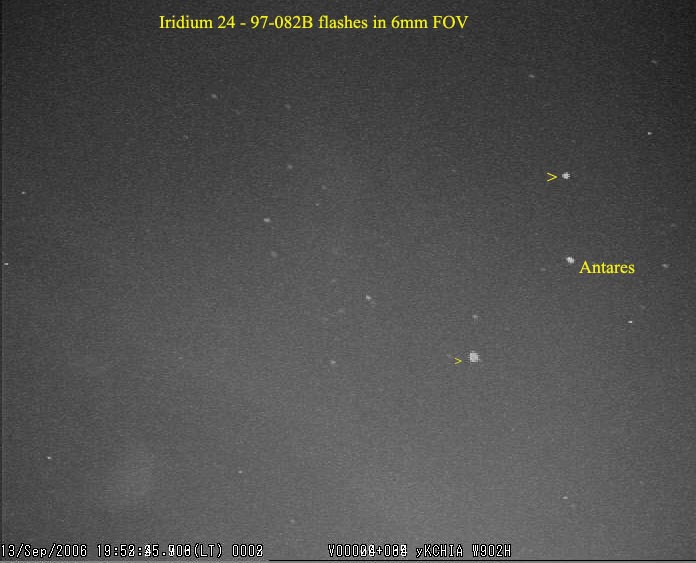
 Two round dots were seen on adjacent frame. Video playback indicates the work of a flashing sat. Using ID, the object was ID to be Iridium #24 or 97-082B. At 6mm FOV only very bright flashes were detected.
Wednesday, September 13, 2006
Iridium 24, 97-082B two bright flashes
Two round dots were seen on adjacent frame. Video playback indicates the work of a flashing sat. Using ID, the object was ID to be Iridium #24 or 97-082B. At 6mm FOV only very bright flashes were detected.


Tuesday, September 12, 2006
docked STS-115 & ISS Sept 12
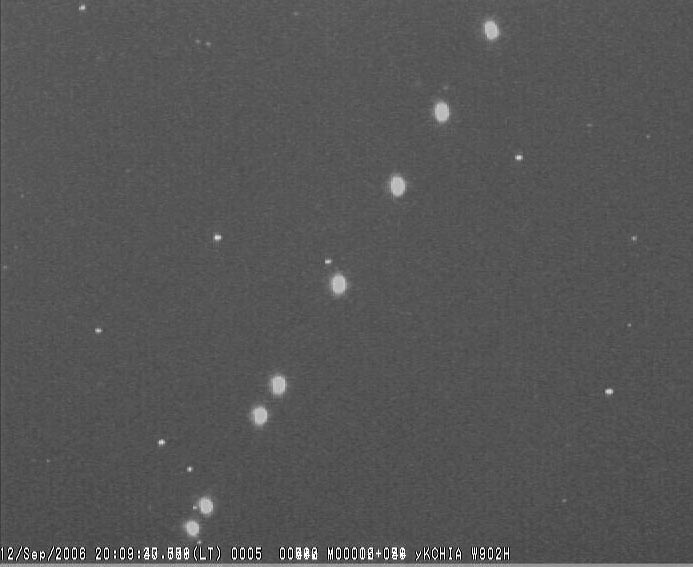 ISS+STS-115 sailed pass the
Teapot (above) slowly losing brighness
before disappearing into Earth's shadow (below).
Monday, August 21, 2006
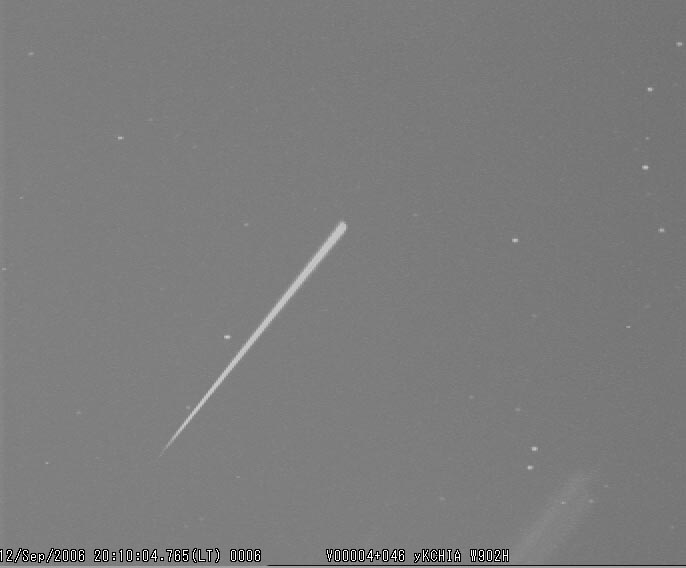
Iridium Satellite Flare tonight 8/21
 Iridium Satellite #75 put out a bright flare (reflection of sunlight) tonight outside my window! Click image to see the time stamp of the event. I calibrated my watch to the seconds by calling 1711 just before the flare and positioned my video camera exactly as i like the flare to transverse the FOV.
You too can find out such flares in your location www.heavens-above.com
Sunday, August 13, 2006
Meteors Aug 13 ( 0hr-6:30am) 6mm video lens
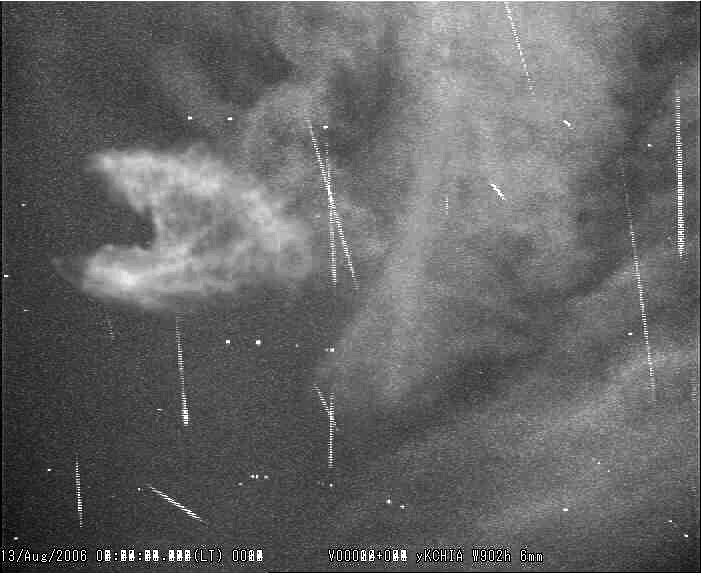 Sky was bad for visual so i left a 6mm f1.4 lens/watec-90wH outside the window running Sontaco's UFOCaputure.
In 6 1/2 hours of detection a
total of 17 meteors were detected
even in this poor sky.
The single image above was
a composite stack
( using IRIS - add_max2 command on each fit image) Click any image for a closer look.
Sunday AM I wanted to find out how many of these were perseids - if any..
So I ran UFOanlayser and
here is a screen-capture
showing the plots of x11 perseids and others.
Imagine if i have a clearer better sky....
 Well better than nothing ...
Monday, August 07, 2006
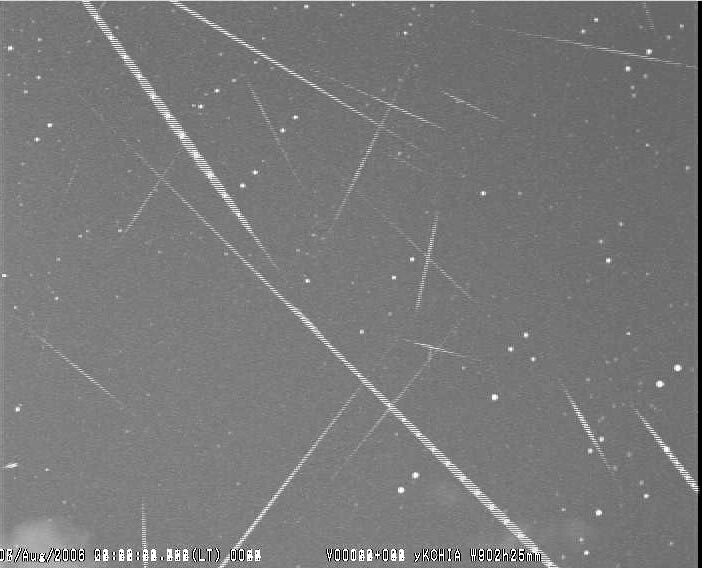
Saturday, August 05, 2006
Meteor Aug4/5 2006
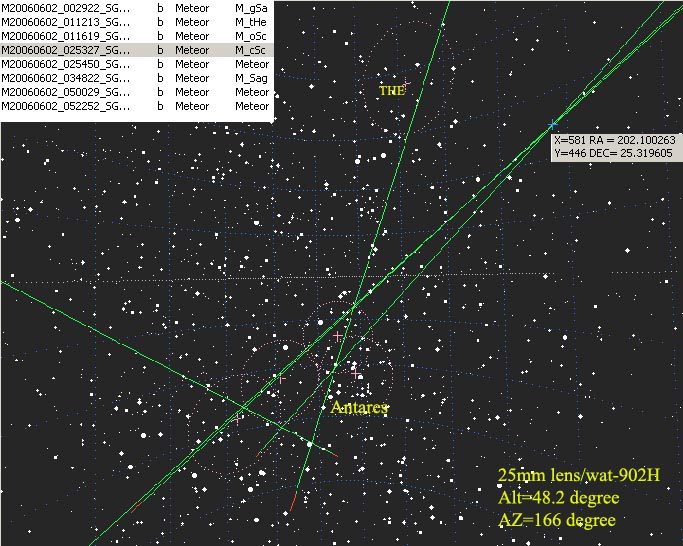
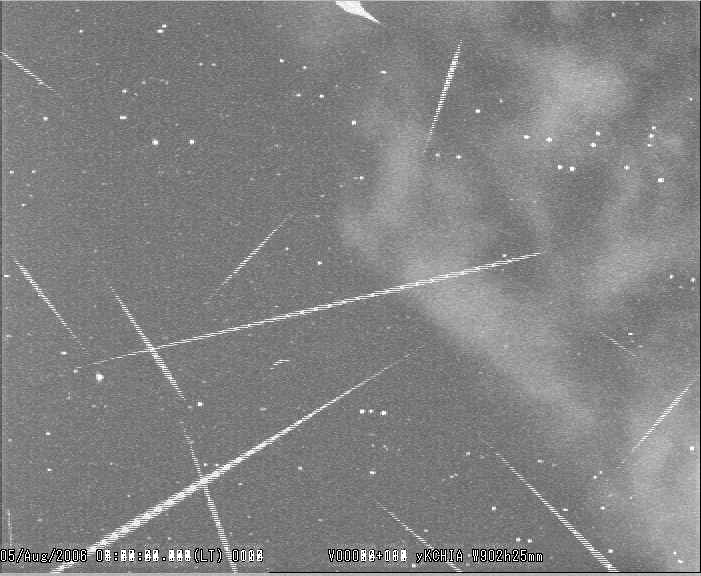 Composite of the meteors detected from midnight to 6:30am Aug 05 '06. A slow bright meteor went out of the FOV at top centre at 05:25:28am ( 25 mm lens /wat 902H / UfocaptureV2)
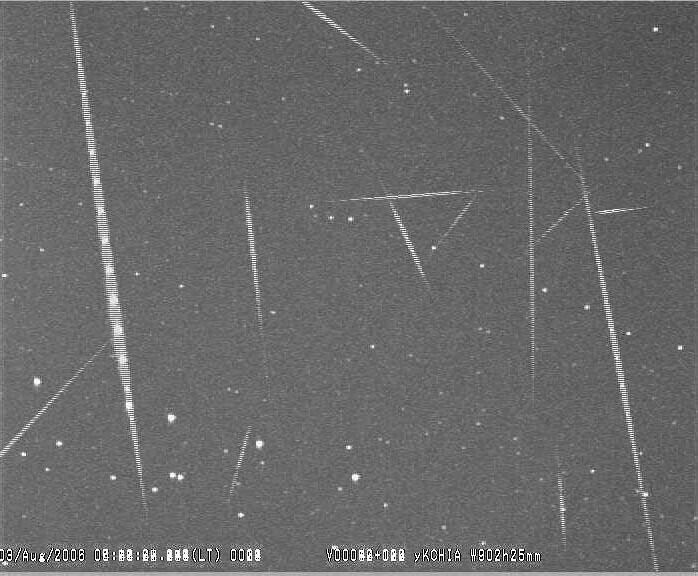
Wednesday, August 02, 2006
Thursday, June 22, 2006
Sunday, June 18, 2006
Early evening meteor 6/17
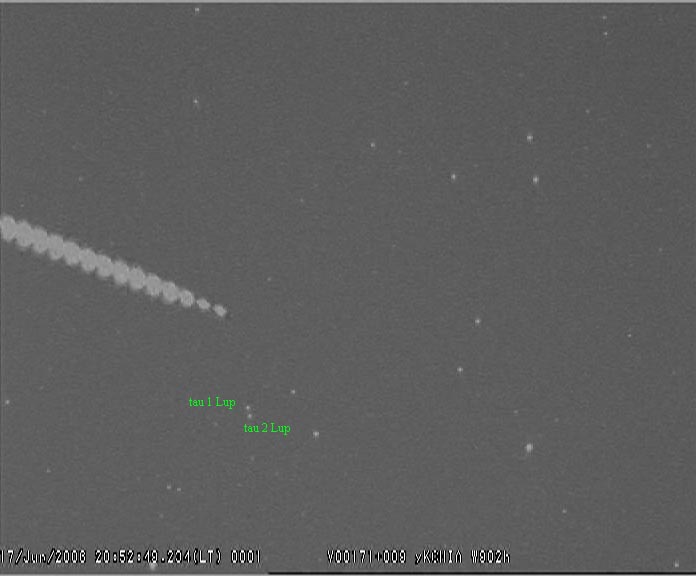 Crux was shinning brightly tonight, I started my meteor monitoring earlier tonight. @ 20:52:49 a bright meteor appeared( above). I deinterlaced the image showing individual head of the meteor in its passage. ( the tail was obscured by the larger size of meteor head) . CLICK image to view larger version.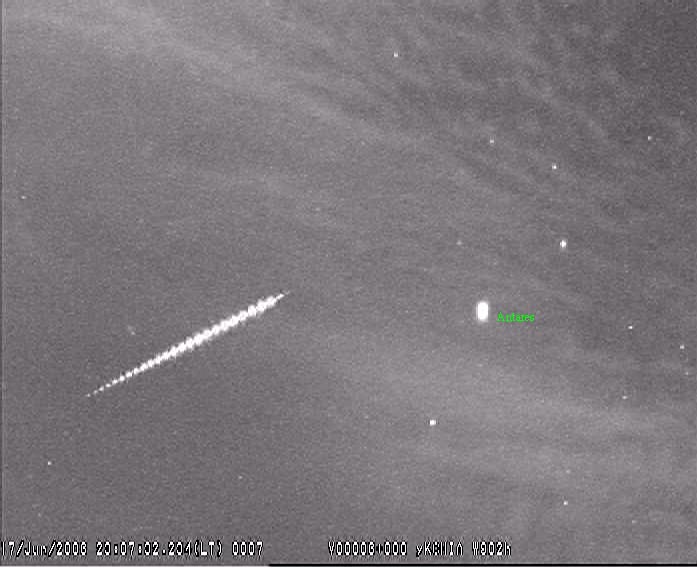
I changed my FOV and directed my lens towards Antares in Sco. Minutes later a pretty meteor grazed by.
 At a meteor left a spear-like profile 0:59:23
Friday, June 09, 2006

Thursday, June 08, 2006
Thursday, June 01, 2006
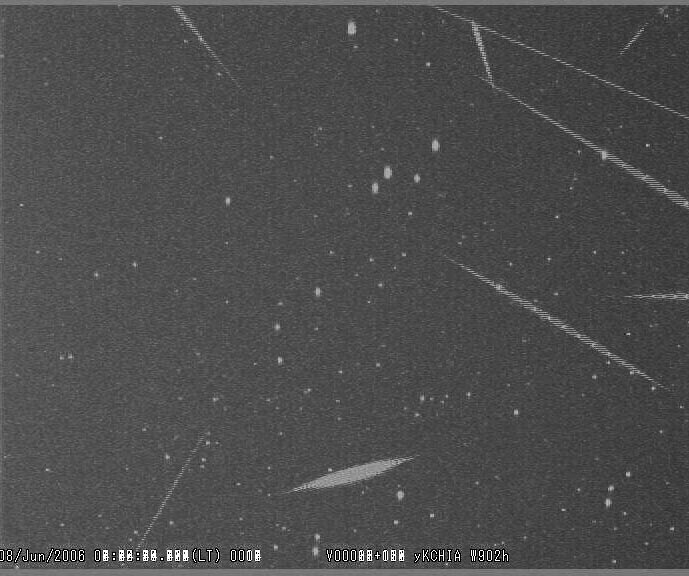
NOAA 8 tumbling in Crux
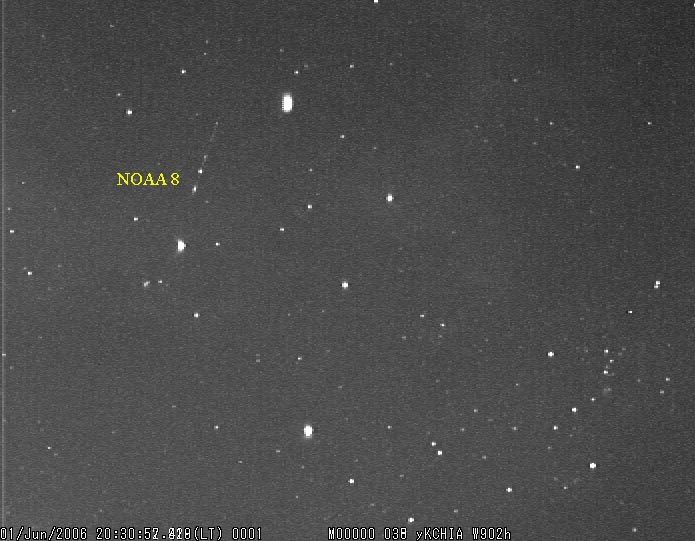 NOAA 8 tumbling slow past NE Crux. The sensitive UFOCaptureV2 manage to pick the slow rise to flash cycle.
Monday, May 29, 2006
NOAA 6 79-057A double flashes
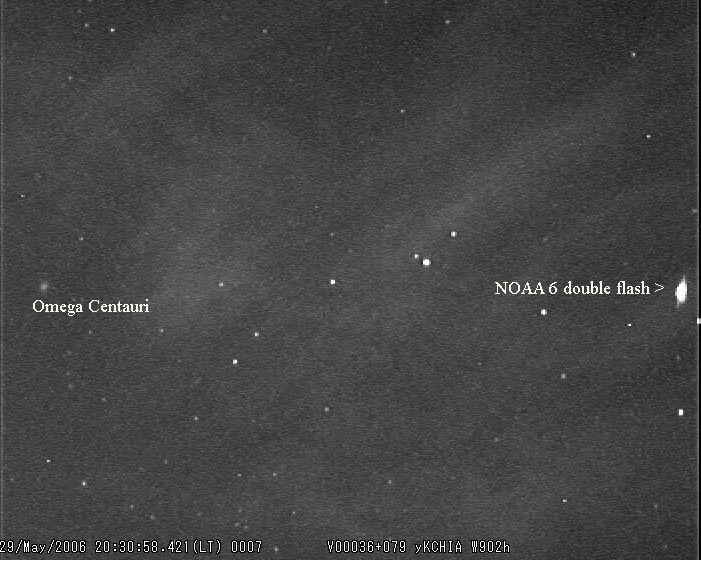 Close to 20:30 - I noticed a odd-shaped bright 'blip' registered near the right hand edge of the frame. AVI played back revealed the work of a bright double flashes from a passing Sat - NOAA 6 or 79-057A.
Saturday, May 27, 2006
Meteors and Bright Flare in the sky
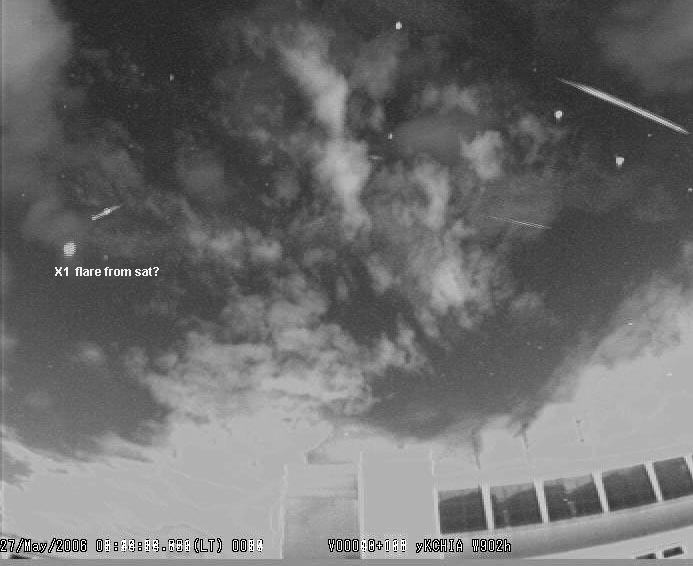
May 27 2006 05:44:55 am
a single x1 bright flare was detected, much brighter than the Jupiter -2.4
a single x1 bright flare was detected, much brighter than the Jupiter -2.4
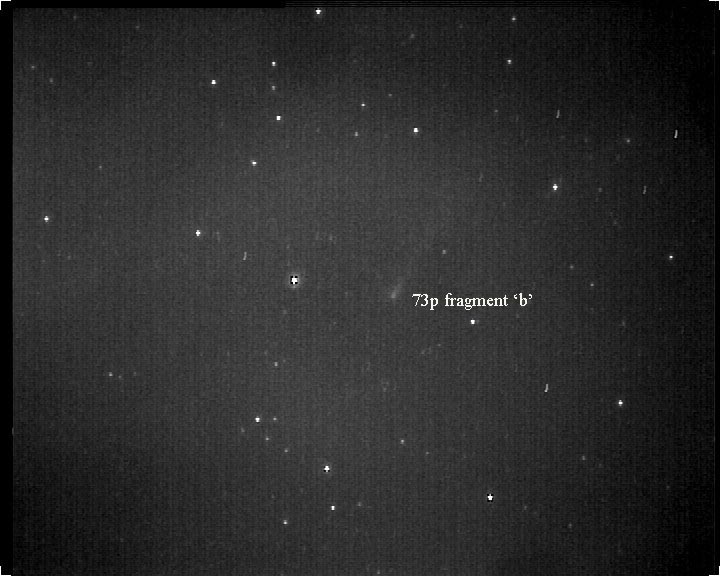
73P - C, B Comet Schwassmann-Wachmann
I arrived at the field around 5:00am. Sky was cleared at zenith where Altair presided, low clouds in the East. I scanned the NE mid elevation, trying to make out the Pegasus's Square. Using one branch of the 'Pegasus' Square, I star-hopped to the area where 73p fragment C supposed to be located. But in 7x50s view, no fuzzy ball jumped out at me from hazy sky. I returned home to get a map printout and brought my usual tripod/Mintron/lens setup.
Nothing was detected at x12 integration. Then I pumped up and maxed the integration - the unmistaken tiny tadpole finally showed up at 100mm end! It was fragment C. I let the Video Walkman run for a few minutes and shifted the FOV 'lower' to locate fragment B. Another fainter tadpole found. Venus appeared above the orws of African Tulips meanwhile early joggers pounding the pavement. This event is unique in a way - how often do you get to see fragments from the same comet!


Nothing was detected at x12 integration. Then I pumped up and maxed the integration - the unmistaken tiny tadpole finally showed up at 100mm end! It was fragment C. I let the Video Walkman run for a few minutes and shifted the FOV 'lower' to locate fragment B. Another fainter tadpole found. Venus appeared above the orws of African Tulips meanwhile early joggers pounding the pavement. This event is unique in a way - how often do you get to see fragments from the same comet!
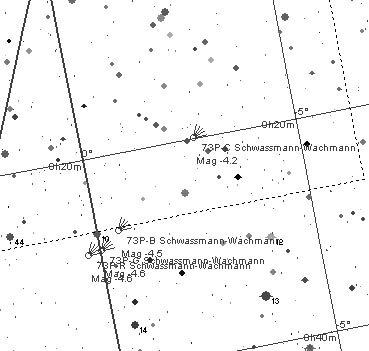

Got some spare time to burn so I restacked
both images using 200 frames to bring out the 'tadpole' a bit better. Both tails are pointing in the same general direction as expected.

both images using 200 frames to bring out the 'tadpole' a bit better. Both tails are pointing in the same general direction as expected.
Saturday, May 20, 2006
Meteor May 20 - AM 3.8mm lens
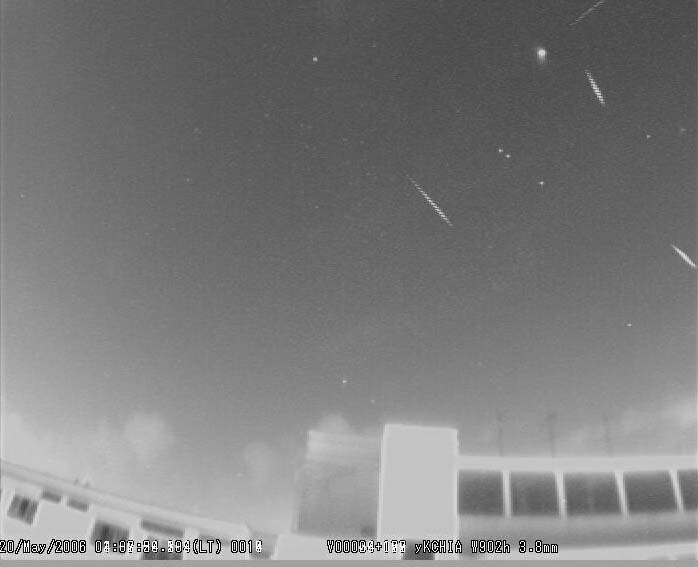 01:37,03:33,03:38,04:02 meteors
even at this large FOV the milkyway
is faintly visible in the video.
Thursday, May 18, 2006
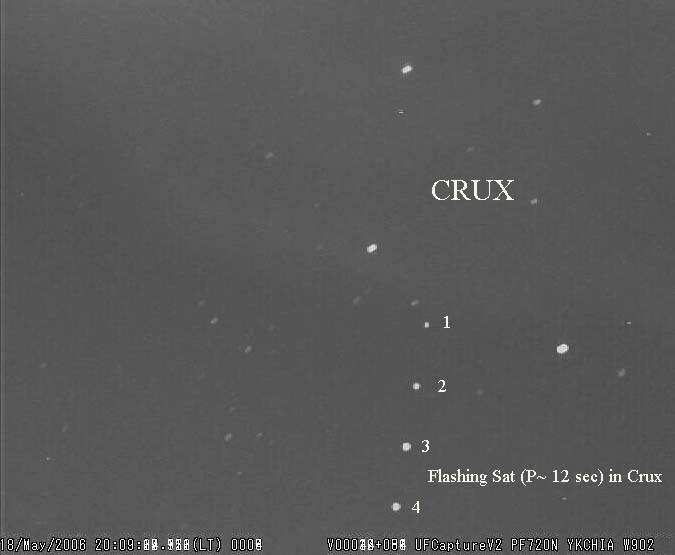
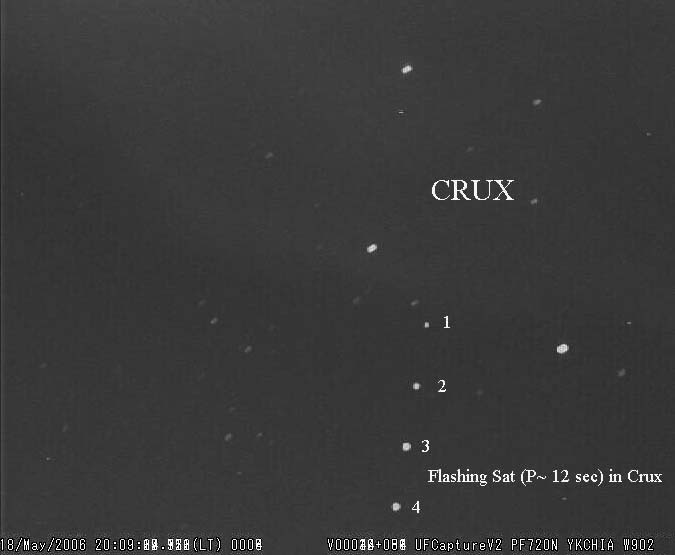
May 18 '06 - Flashing Sat in Crux
A flashing/ tumbling sats drifted into my FOV

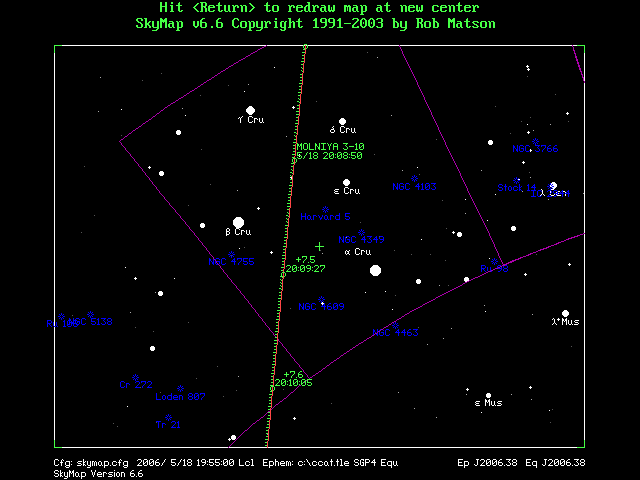
Running skymap with latest TLE - revealed the candidate to be
Molniya 3-10 or 78-095A. From the 4 time stamp created in UFOCapture V2 - the period is ~ 12.5880 seconds. Video ( uploaded 5/22) here (1.89Mb)

Molniya 3-10 or 78-095A. From the 4 time stamp created in UFOCapture V2 - the period is ~ 12.5880 seconds. Video ( uploaded 5/22) here (1.89Mb)
Friday, May 12, 2006
Meteor May 12 '06
Trying out a much larger FOV lens
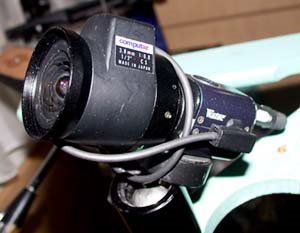 3.8mm f/0.8 aspheric lens with watec 902H
This lens had seen hundreds of Leonids
( in a desert in Jordan/ on top of a high mountain S Korea)
( in a desert in Jordan/ on top of a high mountain S Korea)
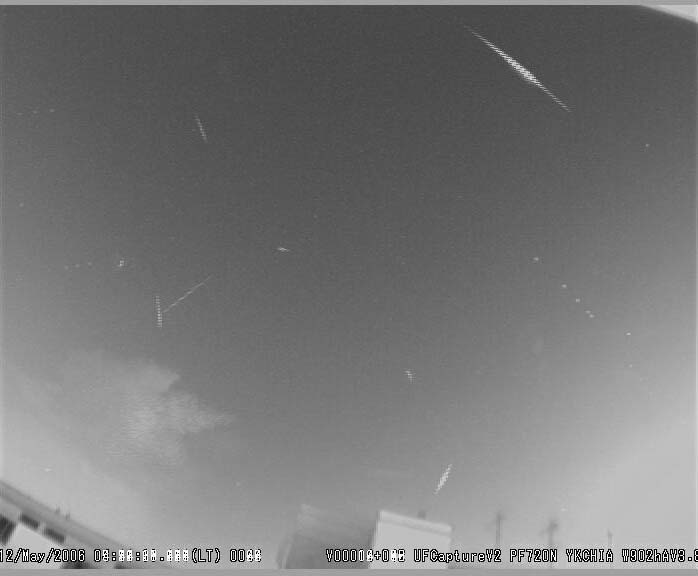
Close to 89 degree FOV -
8 meteors were deteced in between
lightning flashes from
04:12 - 05:43am
8 meteors were deteced in between
lightning flashes from
04:12 - 05:43am
Tuesday, May 09, 2006
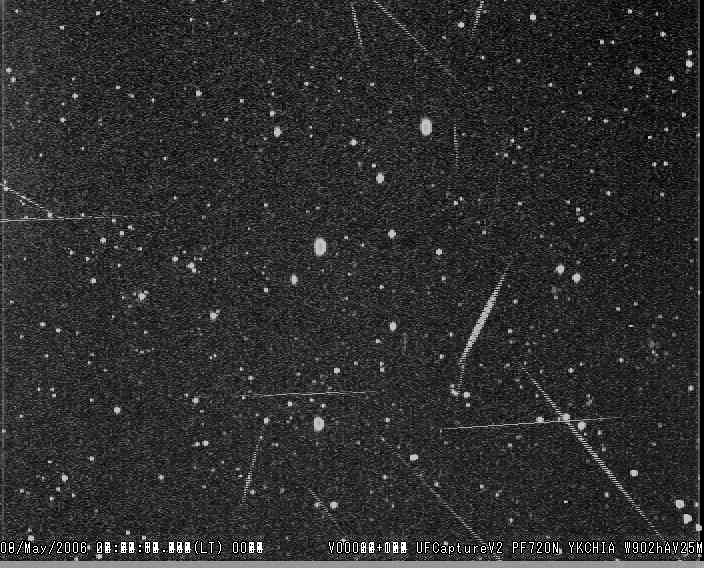
Saturday, May 06, 2006
Polling Day Meteors - Eta Aquarids
My len was pointed quite a distance
from etaAquarids radiant
- still the long streaming meteors were detected near the 'c' shaped Corona Australis.
from etaAquarids radiant
- still the long streaming meteors were detected near the 'c' shaped Corona Australis.
A plot of the three meteors confirmed
their identity - they all intersected in the
circled radiant X
Click image to for a larger view (meteors occurred @ 03:43:36, 04:16:54, 04:27:26)
their identity - they all intersected in the
circled radiant X
Click image to for a larger view (meteors occurred @ 03:43:36, 04:16:54, 04:27:26)

A long etaAqurids, CrA at lower left corner.
 Another going towards CrA
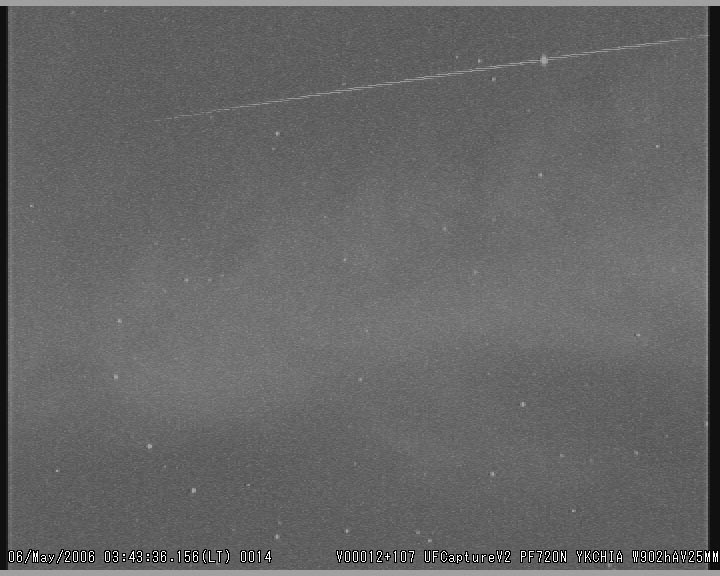 Another going towards CrA
 A rather bright one transversed CrA on the right mid- upper.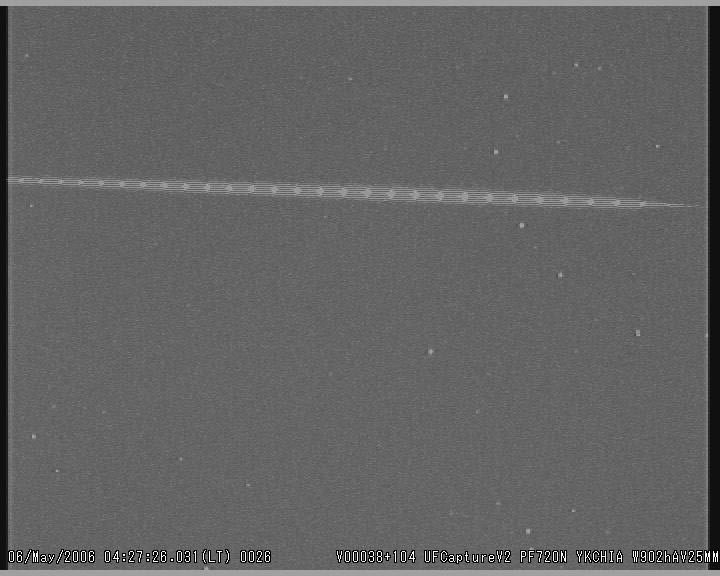
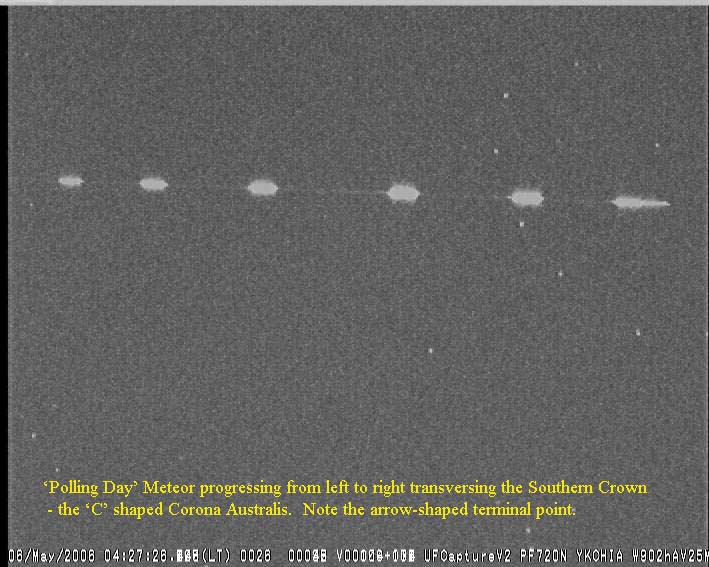
Frame by frame showing the meteor dragging a thin tail.
Note the arrow-shaped terminal points.
Note the arrow-shaped terminal points.
Subscribe to:
Posts (Atom)